
My name is Jens Jakobsson. I’m a Danish nature-lover and photographer. Welcome to my travel guide on the best things to do in the Faroe Islands.
I live in Denmark and have always enjoyed nature, experiencing landscapes and wildlife. I tend to recharge and get new energy when I am in nature. Our planet is an amazing place. You will only discover the best places when you get away from the areas where humans have impacted nature.
My backpack – and sometimes my tent – is something that comes with me often into nature. I have a long bucket-list of areas around the world that I would like to discover. The planet is under severe pressure from humans but there are still many untouched and unexplored places yet to discover.
Photography has always been a big part of my life. Bringing my camera on my adventures makes me more aware of details in nature. I look out for great light, epic scenery or wildlife around the next corner. In my photography, I am getting more focused on conveying a feeling or story.
You can judge for yourself on my Instagram account @kvarmlose.
Inspiration to Visit the Faroe Islands
The Faroe Islands were on my bucket list for years. This small group of islands is located in the Atlantic Ocean between Iceland and Norway. The weather is constantly changing. It is rainy, windy, cloudy and sunny. As some of the locals say: “If you don’t like the weather, then wait 5 minutes”.
But of course, you are in the North Atlantic Ocean, meaning it is often cold and wet. However, these conditions are perfect for landscape photography. When I got the opportunity to go with a small group of landscape photographers, I did not have to think for more than a minute to join.
Six Nights in the Faroe Islands
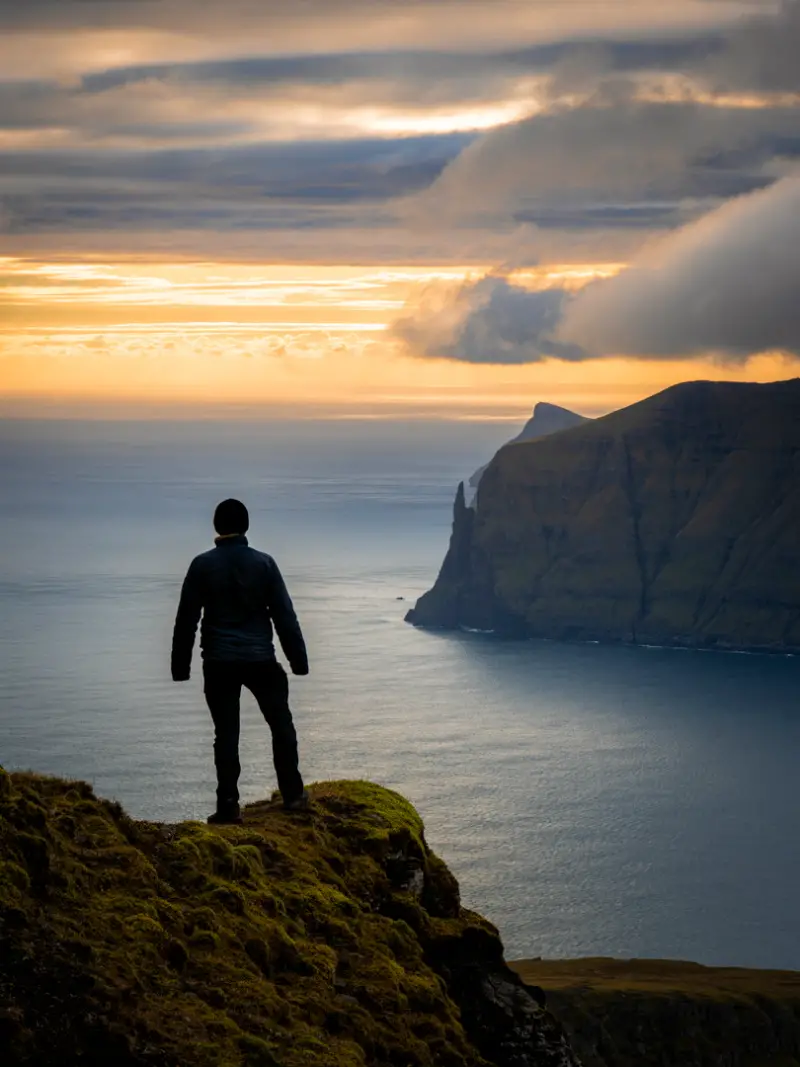
I spent six nights in the Faroe Islands. You could easily spend more time, but the great thing is that the distances on the Faroe Islands are fairly limited. The roads and infrastructure work quite well. You can stay at the same location and then take adventures from there everyday.
The Faroe Islands consist of 18 different islands, some of them very small. I visited five islands: Streymoy, Vagar, Eysturoy, Bordoy and Kalsoy. These islands cover most of the population and a lot of beautiful scenery. They are all easy to access – going to Kalsoy you need to go by ferry though.
The best way to discover the Faroe Islands is by not making a schedule. You can decide which locations you want to visit and then make a day-by-day decision based on the weather. This worked well for me. Some locations are great in windy conditions – and trust me, it can be really windy.
Other locations are great for sunset or sunrise if you are lucky to get a day without clouds. If you rent a car it is easy to get around. The roads are in good condition. I stayed for the week in a hotel just outside Torshavn. From here the driving distance to most locations is less than an hour.
Favourite Place in the Faroe Islands: Sea Stacks at Drangarnir
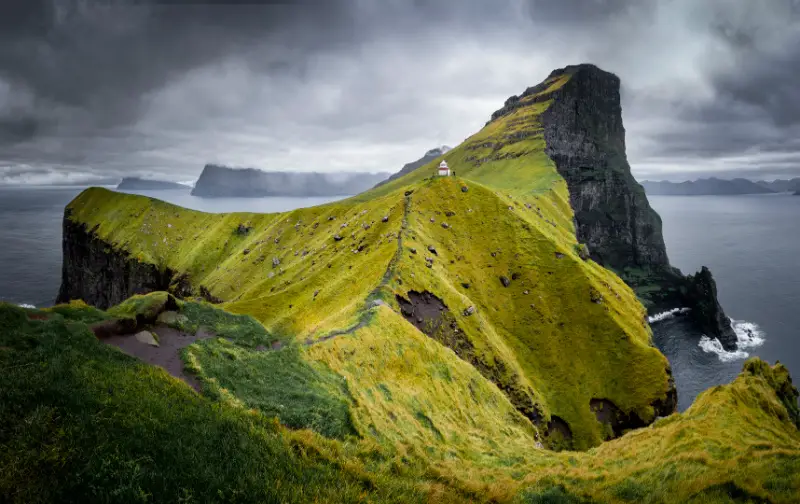
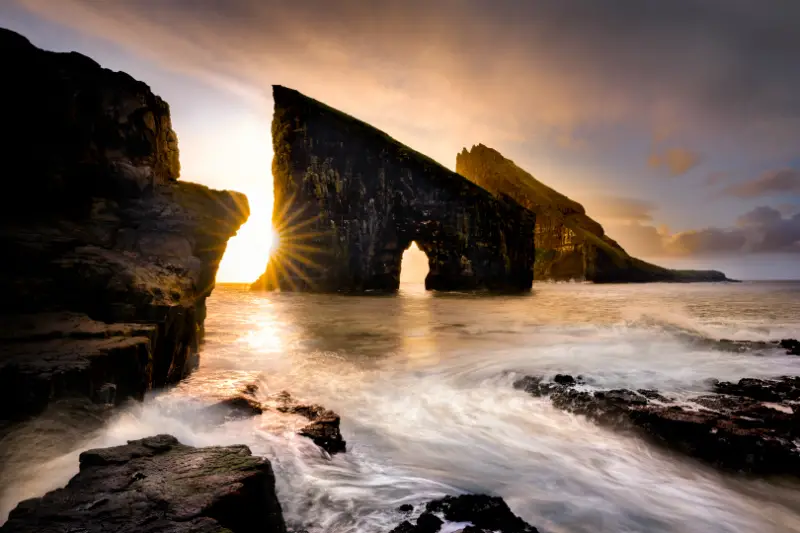
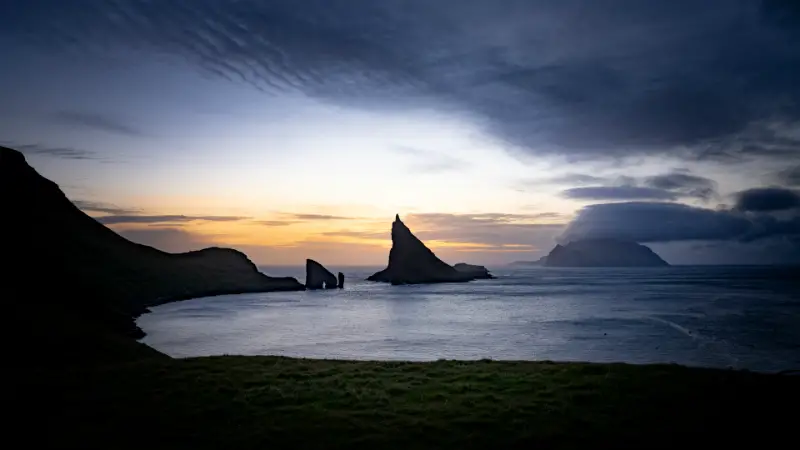
There was one location I wanted to visit more than any other. The sea stacks at Drangarnir. The shape of these sea stacks with a hole in the middle and the island Tindholmur in the background forming the same triangular shape as Drangarnir has always fascinated me.
The sea stacks at Drangarnir are also an ideal location for sunset in spring and autumn. We decided to go there on the only day of the week where it would be mostly sunny. My ultimate dream for the Faroe Islands was to get a photo from the cliffs near the sea with the sunset behind the sea stacks.
When you go there you need a local guide. You are on private land and are not allowed access without the guide. All participants pay 550 Danish kroner equal to 73 Euros and of course you need an agreement in advance.
But it is really worth it. First of all, you are out there alone with your group. We were hiking 16 kilometers that day. It was our guide who showed us the impressive view from the cave towards Drangarnir. What a sight it was!
10 Best Things To Do in the Faroe Islands
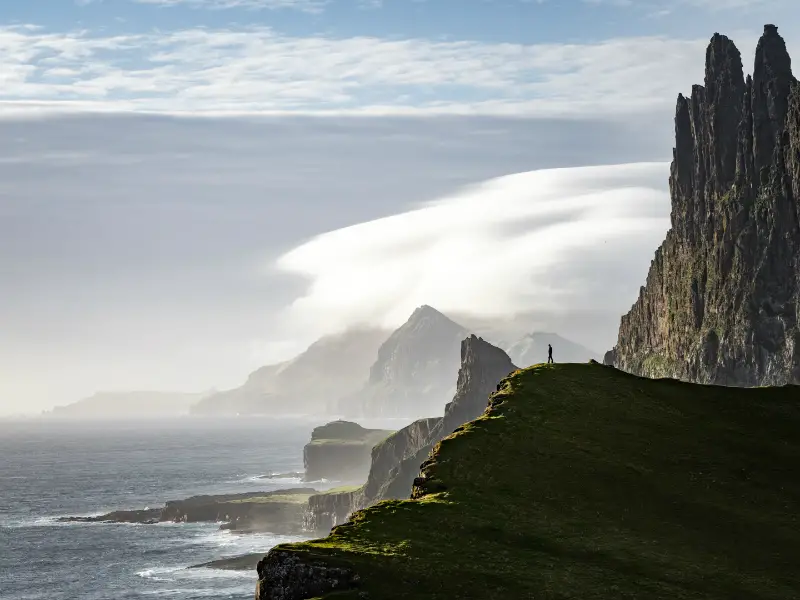
It is always difficult to point out a top 10 list because we all have different interests and focus areas. But if you want to discover the nature of the Faroe Islands and are willing to hike, I would recommend the following:
1. Hike to the Sea Stacks at Drangarnir
The hike to the sea stacks of Drangarnir is amazing with spectacular views along the fjord. You meet lots of sheep and are rewarded at the end with spectacular views of the sea stacks and the rough coastline from both a high and low perspective. Expect at least a 6 km hike each way.
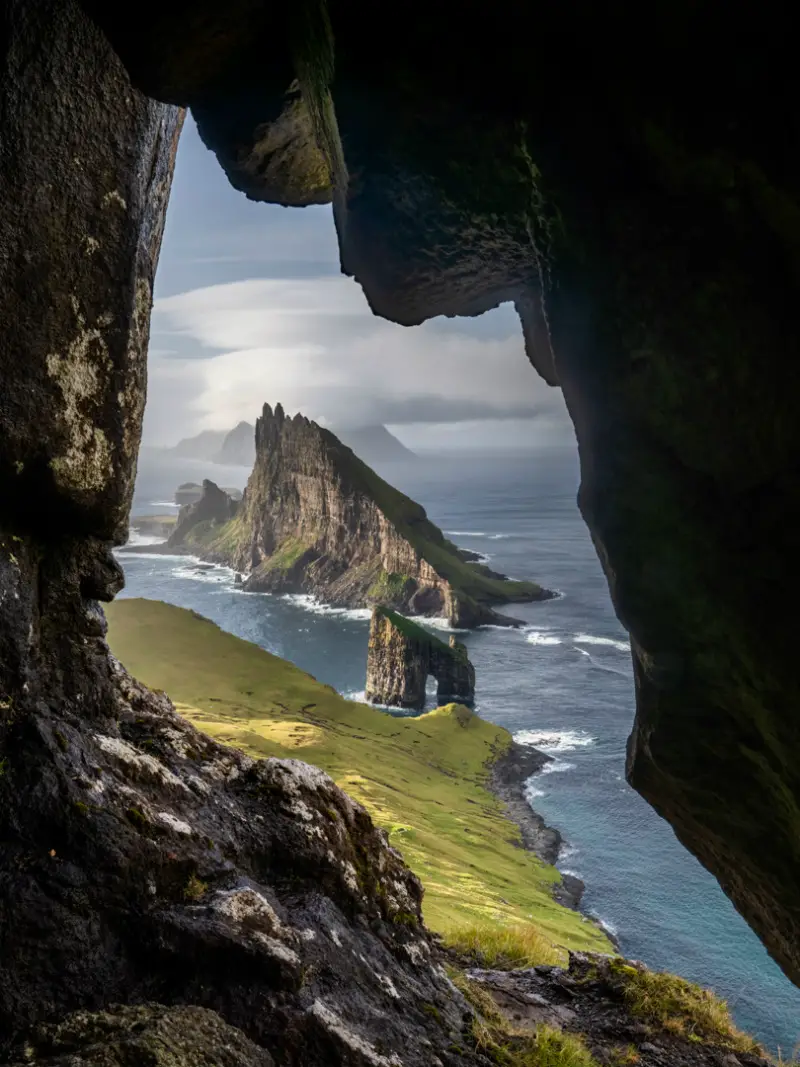
2. Venture to the North Tip of the Island at Kalsoy
From the north tip of Kalsoy you have a view of a significant cliff, a lighthouse and a vertical drop of maybe 200 feet to the sea. You go by ferry to the island and drive to the end of the road, from where you hike less than an hour to the viewpoint. I recommend this adventure on a day trip.
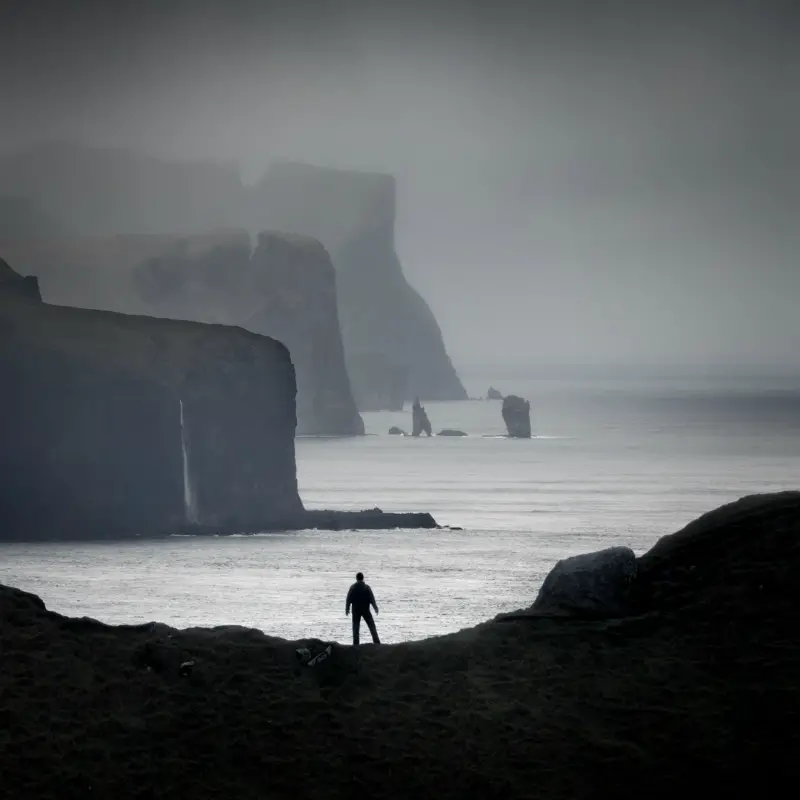
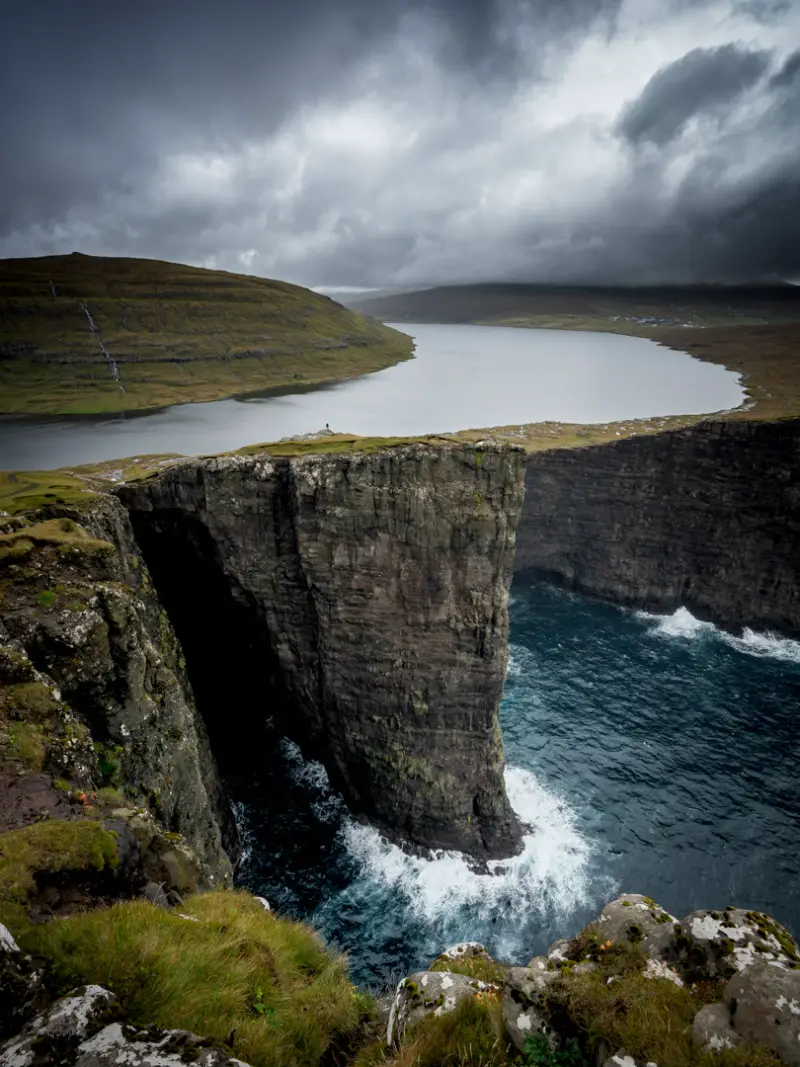
3. Discover Trælanipan and the Flying Lake
You can reach this spot with a 2-3 kilometer hike each way, but you can easily extend your trip and get around to explore the area further. You will see the contrast between the waves of the North Atlantic Ocean splashing into the cliffs and the quiet surface of the lake Leitisvatn in the background.
4. Take Photos of the Mulafossur Waterfall
This is a famous attraction accessible by car. Therefore, one of the most photographed locations. It is awesome to see the small village in the middle of an amazing landscape with the waterfall in the foreground.
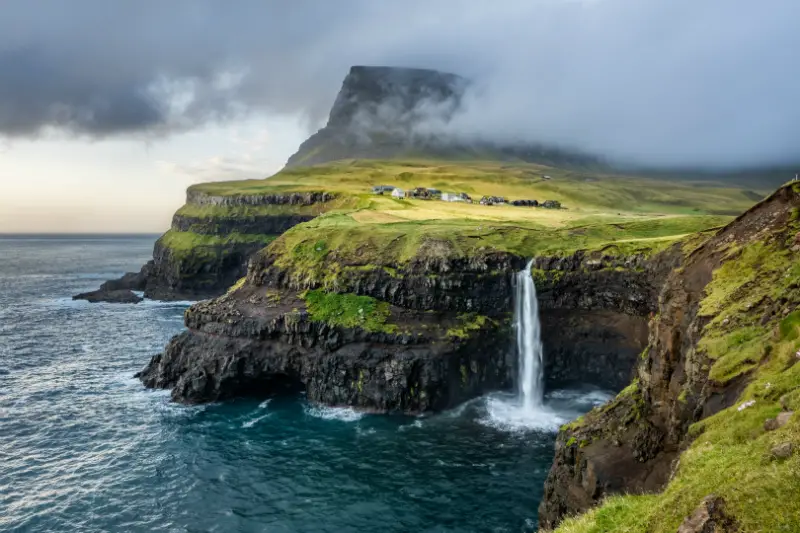
5. See Fossa – The Largest Waterfall of the Islands
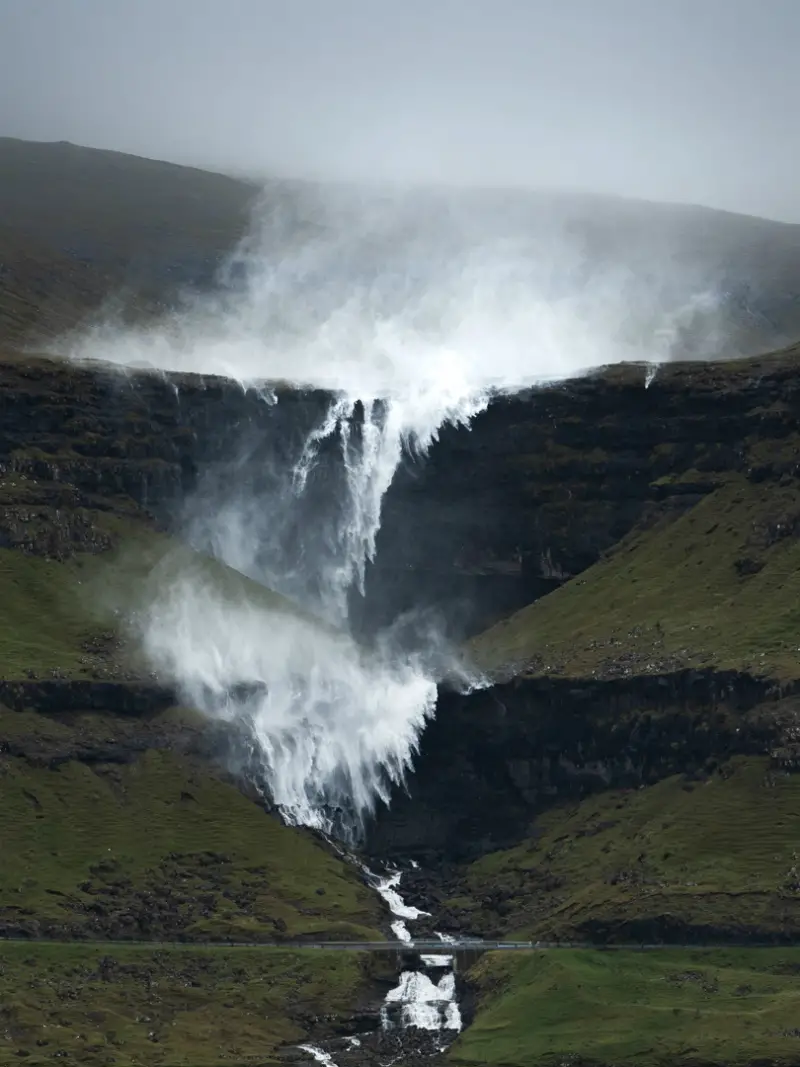
The road passes by the waterfall Fossa, and you can stop and walk up alongside the majestic waterfall. Additionally, you can watch the waterfall from the distance on the other side of the fjord. This is spectacular in heavy winds when the water is blown up in the air.
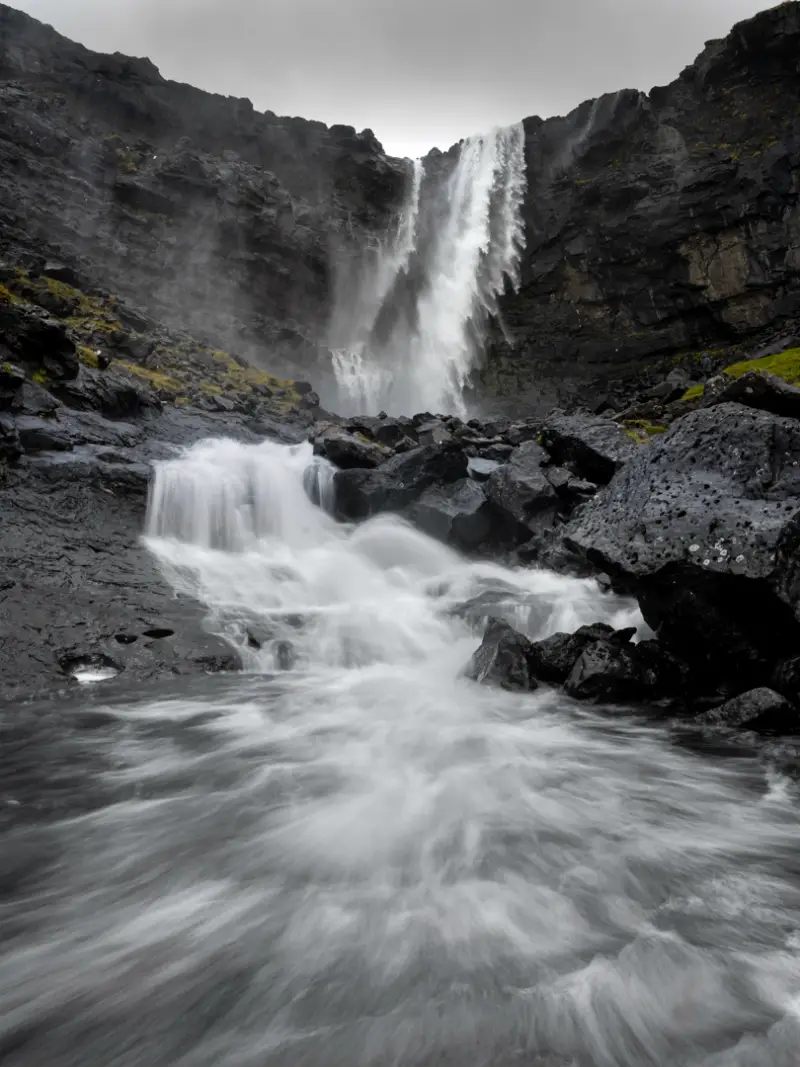
6. Explore the Coastline and Waterfall North of Eidi
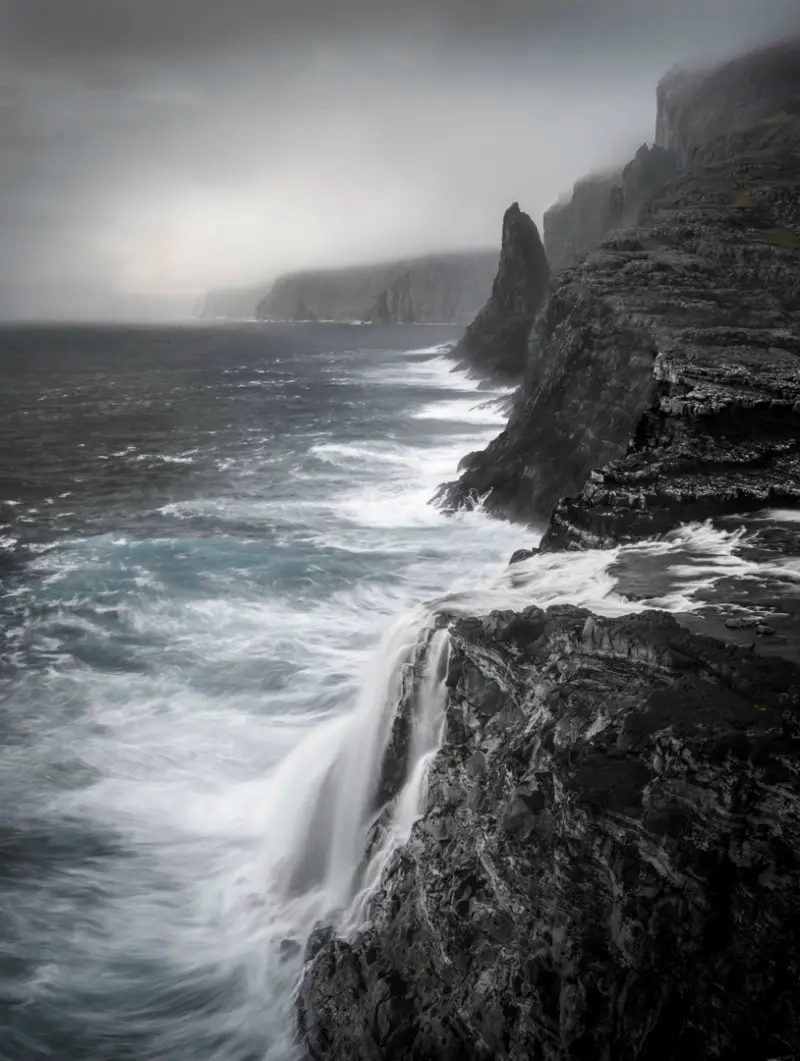
The rocks at the beach are formed in spectacular patterns and the waves and waterfall can be impressive in rough weather. Another stunning spot!
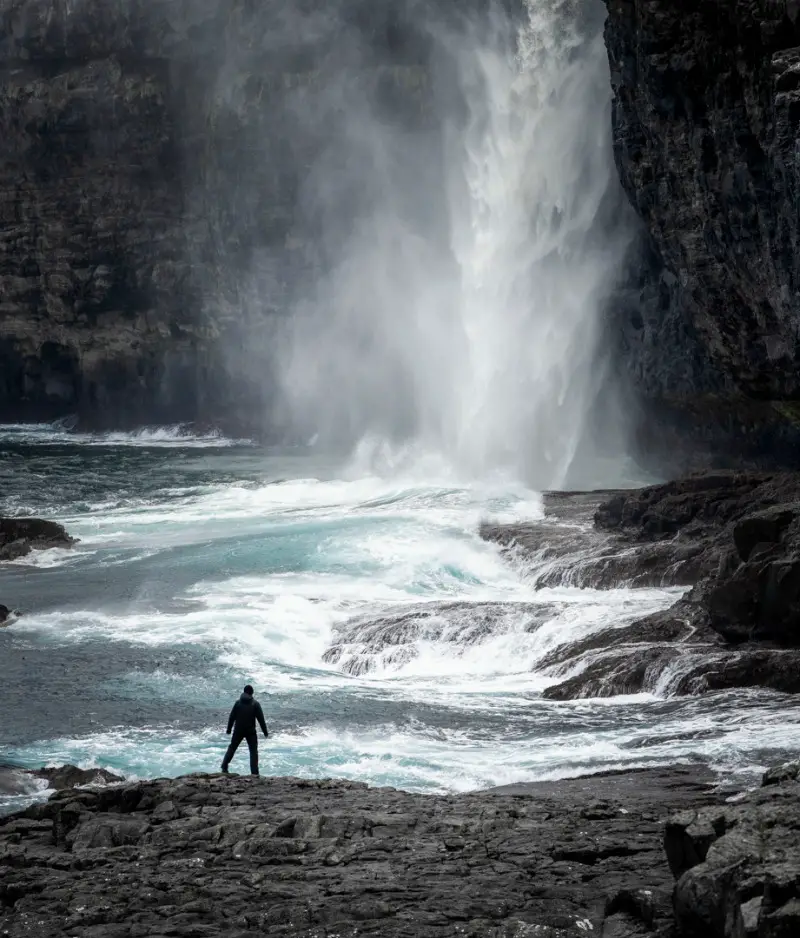
7. View the Fjords North of Funningur at Hvithamar
You can park your car on a small parking lot just north of Funningur and walk to the top of the hill with a spectacular view of the fjords and islands on the north coast. When you are in the area continue to the small village Gjogv – a beautiful village and coastline. A great adventure for the day.
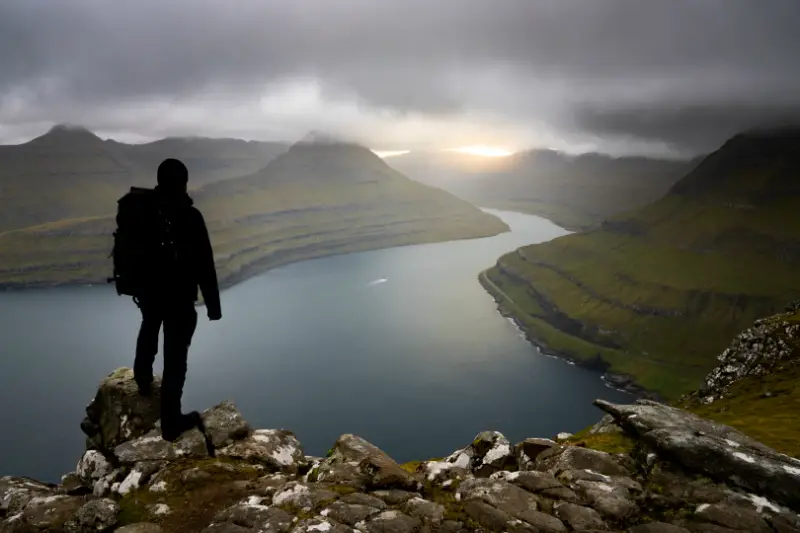
8. Visit the Small Village of Tjornuvik
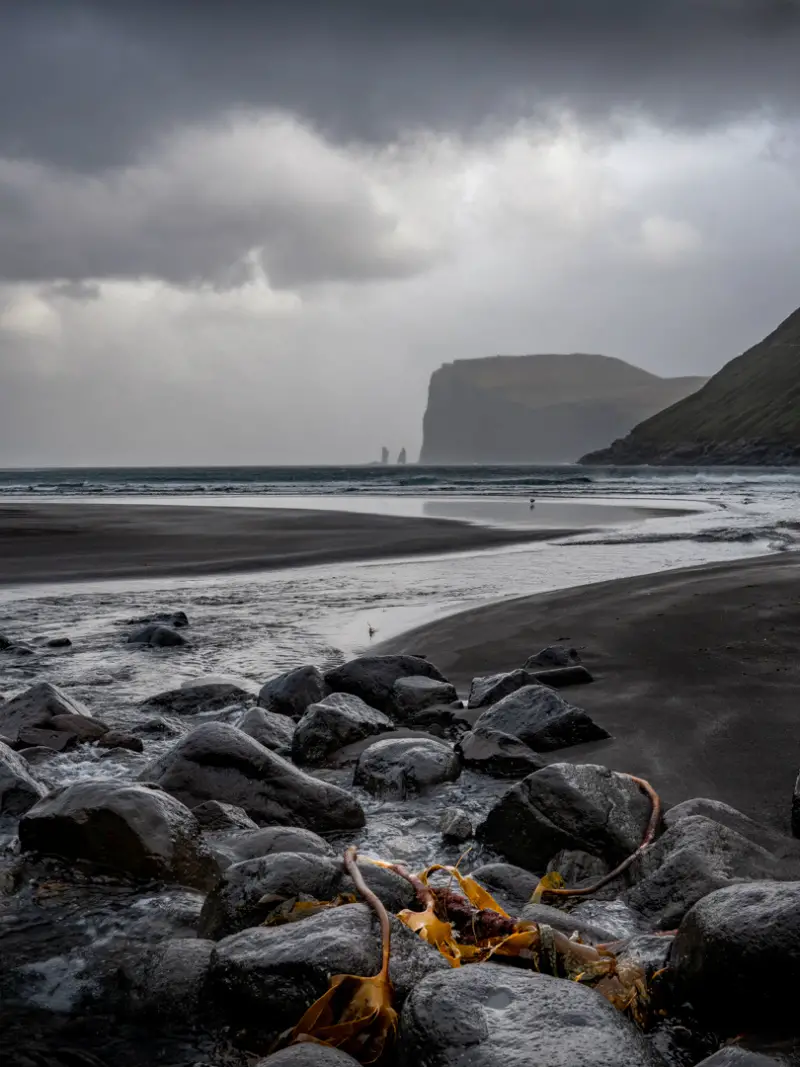
Tjornuvik is a small village in a bay with a black-sand beach, offering views to the sea stacks of Risin and Kellingin on the horizon. The sea stacks are 70 meters (200 feet) high, but they seem small in the distance.
9. Admire the Authentic Houses of Saksun
Saksun is a valley with old authentic houses and a white church with high black rocks surrounding it. You can access this popular place by car.

10. Spend a Day or Two in Torshavn
Torshavn is the capital city. It’s a cozy town where almost half of the Faroese population lives. Worth a walk among old houses and around the harbour.
Culture of the Faroe Islands
The Faroe Islands is a self governing part of Denmark. The main industry is fishing with an ideal position in the middle of the Atlantic Ocean. Faroese people have always been used to having nature around them as key for survival. Sheep on land and fish in the ocean is part of everyday life.
Tourism has been growing during the last decade, but you are still able to discover the Faroe Islands without too many tourists – especially if you visit the islands outside the summer period. The Faroese people are in general very accommodating to visitors. The people I met were warm and friendly.
Food Scene of the Faroe Islands
In the Faroe Islands, the food is centered around the local resources of fish, lamb and birds. If you like seafood, it is fresh and difficult to imagine anything better. Probably the most spectacular specialty is the Atlantic Puffin. It has traditionally been on the menu in the Faroe Islands.
I have not tasted it, and I prefer to shoot them with my camera instead. You find a lot of great restaurants in Torshavn, both with Faroese food and restaurants with more continental dishes. I would recommend, though, that you try some of the local dishes. It’s always going to be unique!
Where to Stay in the Faroe Islands
I stayed at the Hotel Foroyar for my week visit. It’s located on a hill above Torshavn. Great hotel and easy to access by car. A disadvantage is that it’s located outside the town, and you need to drive to restaurants downtown.
They have a great restaurant at the Hotel Foroyar, but some days you would most likely want to try something else. There are also Airbnb’s available in the Faroe Islands if you want an authentic house in a local community.
Epic Nature of the Faroe Islands
The most amazing thing about the Faroe Islands is that nature changes every hour. I was impressed by the waves crashing into cliffs, strong winds blowing the water from waterfalls, rain showers that suddenly changed to sunbeams shining through the clouds and sunsets behind sea stacks.
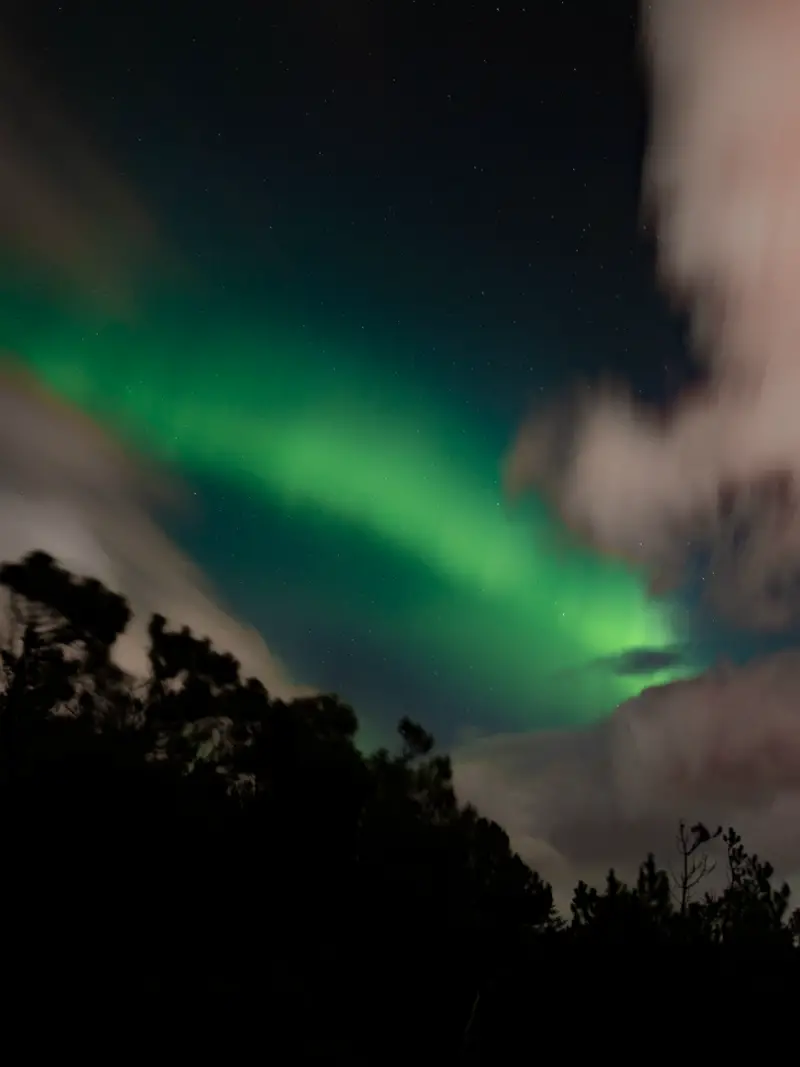
On top of all these amazing experiences – totally unexpected – I did see the Northern Lights for the first time in my life. Close to midnight with a hole in the cloud cover the fantastic green light was dancing in the night sky.
It was just a short glimpse less before the clouds covered the sky again, but really amazing. The Faroe Islands are not the ideal location for Northern Lights because of the ever-occurring clouds, but you can be lucky.
Need to Know Before you Go
If you want to visit the Faroe Islands I would recommend you bring warm clothes and proper rain clothes. Get out even when it is windy or when it rains. You will be rewarded by the most spectacular views when the sun suddenly breaks through the clouds. Sometimes rough weather is better.
Change your plans according to the weather. Some coastlines are best with strong winds from the south. Some mountains are always covered in clouds when the wind comes from the north. Other locations are excellent for sunsets or sunrise. Check the forecast but be flexible in your daily plans.
Try to find the locations or time of day where you can be more or less alone in beautiful nature. This will give you an opportunity to just enjoy nature and reflect on life. You will return home filled with fresh air and new energy. Thanks for reading and enjoy your adventures in the Faroe Islands!